Padel Recovery Guide: After a Match and When to Get a Niggle Checked
By Prem Bassi DC, MChiro, GCC-registered chiropractor and padel player · Published · Last reviewed
Short answer
After a match, cool down with a few minutes of easy movement, drink, eat and sleep, and expect some muscle soreness for a day or two. Soreness is usually spread out, mild and eases as you move. Sharp pain in one spot, swelling, or pain that is worse the next morning or lasts beyond three days is worth getting checked.
What is a good after-match routine?
Keep it simple: a few minutes of easy walking or cycling to cool down, a drink and something to eat, gentle movement later that day and a proper night of sleep. Give yourself a day before hard training, and play again when you feel close to normal and move without pain.
Cool-down. Five minutes of easy walking lets your heart rate come down gradually. Add gentle movement for the areas padel uses most: hips, calves, shoulders and upper back. Nothing needs to be forced.
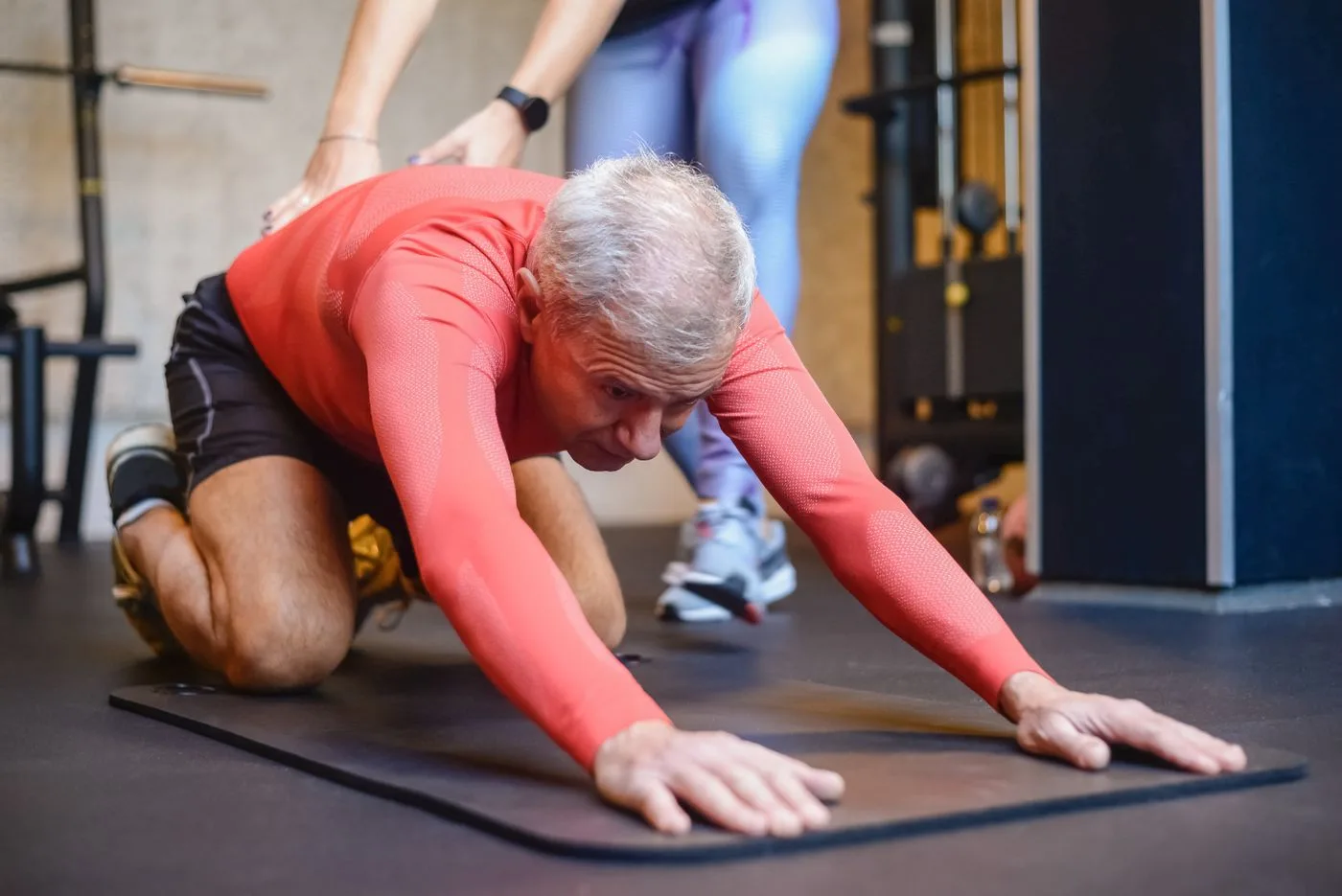
The next 24 hours. Keep moving through the day and avoid sitting still for hours. If you have a desk job, stand up regularly, because stiff hips and a stiff back are a common start to padel back pain.
Sleep. If you play late on a Wednesday evening, leave yourself time to wind down before bed.
When to play again. There is no set number of days. If you are mildly sore, move normally and sleep well, you can usually play again. On back-to-back days, keep the second match lower in intensity.
What is normal soreness, and what are the signs of an injury?
Normal next-day soreness is mild, spread across a muscle group and eases as you warm up. Signs of an injury are sharp pain, pain in one specific spot, swelling, pain that is worse the next morning, or pain that is still there after three days. Those signs are worth getting checked.
- +Usually normal: a dull ache across the thighs, calves, shoulders or back that is worst on day one or two and eases as you move.
- +Worth checking: sharp pain, especially during a particular shot or step.
- +Worth checking: pain you can point to with one finger.
- +Worth checking: swelling or bruising.
- +Worth checking: pain that is worse the next morning, or still there after three days.
Get urgent medical help (call 999 or go to A&E) if you have chest pain, if a joint looks out of shape after a fall or collision, or if you cannot put weight on a leg after a twist or fall.
What should I do in the first 48 hours after a strain?
The PEACE and LOVE framework (Dubois and Esculier, 2020) gives a practical guide. In the early days, protect the area, elevate it, avoid routinely using anti-inflammatory medicines, compress gently and get the right information. After that, add load gradually, stay positive, keep your heart rate up and rebuild with exercise.
The framework by Dubois and Esculier (2020), published in the British Journal of Sports Medicine, covers strains and sprains. The early part is PEACE.
- +Protect: for the first few days, unload the area and avoid movements that provoke pain, then stop resting it as soon as you comfortably can.
- +Elevate: raise the limb above the level of your heart when you can.
- +Avoid anti-inflammatories: the authors advise against routinely using anti-inflammatory medicines and ice, because inflammation is part of normal tissue repair.
- +Compress: gentle taping or a compression sleeve may limit swelling.
- +Educate: an active approach is usually better than rest alone.
After the first few days comes LOVE: Load, so normal movement returns as pain allows; Optimism, because confidence matters; Vascularisation, meaning pain-free cardio; and Exercise, to rebuild mobility, strength and balance.
Can I play through a niggle?
Sometimes. A simple rule, adapted from a pain-monitoring model used in research on Achilles tendinopathy (Silbernagel et al., 2007), is that mild pain while you play is acceptable if it has settled by the next morning. Sharp pain, or pain that builds or lasts, is a signal to stop.
Silbernagel and colleagues (2007) studied people with Achilles tendinopathy who kept playing sport during rehabilitation, using pain as the guide. The rule here is adapted from that model, which was studied in one condition, so treat it as a guide.
- +Mild pain while you play that has settled by the next morning is a sign you can usually carry on, perhaps with a little less volume.
- +Pain that gets worse as you play, or is still there or worse the next morning, is a sign to reduce or stop.
Why does padel load the body differently?
Padel is played in a small, walled court, so you spend a lot of time in a low ready stance, hitting overheads, twisting, reacting to rebounds off the glass and changing direction quickly on artificial turf. A short, stringless racket and the way you grip it also load the forearm and elbow.
- +The low ready stance loads the hips, back and knees.
- +Overheads, including the bandeja, the víbora and the smash, load the shoulder and upper back.
- +Rebounds off the glass mean more reacting, turning and lunging.
- +Quick direction changes on artificial turf load the knee, ankle, calf and Achilles tendon.
- +Racket weight and grip pressure load the forearm tendons and the wrist.
See our padel injury clinic page.
What are the common padel injuries?
The injuries we see most are elbow pain, shoulder pain on overheads, low back pain, calf strain, Achilles tendinopathy, patellar tendinopathy, ankle sprain and wrist pain. Each has a plain name and a clinical name, and most have a guide here that explains what they feel like and how they are assessed.
- +Padel or tennis elbow, clinically lateral elbow tendinopathy: read the guide.
- +Shoulder pain on overheads, clinically rotator cuff related shoulder pain: read the guide.
- +Low back pain: read the guide.
- +Calf strain, a strain of the calf muscles: read the guide.
- +Achilles tendinopathy, pain in the tendon at the back of the heel: read the guide.
- +Patellar tendinopathy, pain just below the kneecap, sometimes called jumper’s knee: read the guide.
- +Ankle sprain, a stretch or tear of the ligaments around the ankle: read the guide.
- +Wrist pain: read the guide.
What does an assessment at Baseline involve?
We take your history, including how often you play, your racket and your footwear, examine how you move, test the painful area and the joints around it, and explain what we find. Treatment, where appropriate, may start at the first visit, and you leave with a plan. We are on site at Racketeer.
You do not need a GP referral. Book an assessment, call 07465 280181 or message us on WhatsApp. There is free on-site parking.
Opening offer: first appointment £47.50, until 31 December 2026.
Frequently asked questions
Should I use ice or heat after padel?
For next-day muscle soreness, many people find warmth comfortable, though that is comfort rather than a proven treatment. After a strain, PEACE and LOVE advises against routinely using ice and anti-inflammatory medicines in the early days, and suggests gentle compression and elevation instead.
How long should I rest a padel niggle?
There is no set number of days. Rest from the movements that provoke pain for the first few days, then bring load back gradually as pain allows. If it is still sharp, in one spot, swollen or no better after three days, get it checked.
Can I play padel with tennis elbow?
Often you can carry on at a reduced level while it is assessed, but it depends on how severe the pain is and how it behaves afterwards. Pain that is sharp or lasts into the next day is a sign to cut back. See our guide to tennis and padel elbow.
How do I recover between matches on back-to-back days?
Treat the day between as part of your routine: easy movement, food, drink and sleep, and a lower-intensity second match if you are sore. If something is sharp, in one spot or getting worse, rest it rather than playing through.
When should I get a padel injury checked?
Get it checked if the pain is sharp, centred on one spot, swollen, worse the next morning or still there after three days. Get urgent medical help (call 999 or go to A&E) if you have chest pain, a joint that looks out of shape or cannot put weight on a leg.
Sources
- Dubois B, Esculier J-F (2020). Soft-tissue injuries simply need PEACE and LOVE. British Journal of Sports Medicine 54(2):72–73. doi:10.1136/bjsports-2019-101253
- Silbernagel KG, Thomeé R, Eriksson BI, Karlsson J (2007). Continued sports activity, using a pain-monitoring model, during rehabilitation in patients with Achilles tendinopathy: a randomized controlled study. American Journal of Sports Medicine 35(6):897–906. doi:10.1177/0363546506298279
Related guides
- Is Padel Bad for Your Back?
Padel and racket sport · 16 November 2026
- Padel in Winter: How to Warm Up Properly
Padel and racket sport · 9 November 2026
Book an assessment
Inside Racketeer, North Acton. Free on-site parking. No GP referral needed.
Opening offer: first appointment £47.50, until 31 December 2026.
Related padel guides
- Padel injury clinic in LondonCommon padel injuries, why they happen and how they are assessed at Racketeer.
- Padel shoulder painShoulder pain on bandejas, víboras and smashes.
- Padel back painLower back pain from the low stance, twisting and overheads.
- Padel knee and ankle painKnee and ankle pain from stops, starts and changes of direction.
- Tennis and padel elbowPain on the outside of the elbow from grip and impact.
- Racket-sport playersHow we work with people who play padel, tennis and squash.
- Is Padel Bad for Your Back?Blog guide
- Padel in Winter: How to Warm Up ProperlyBlog guide
This information is general and does not replace an individual assessment. If you are in significant pain or worried about a symptom, get it checked properly.